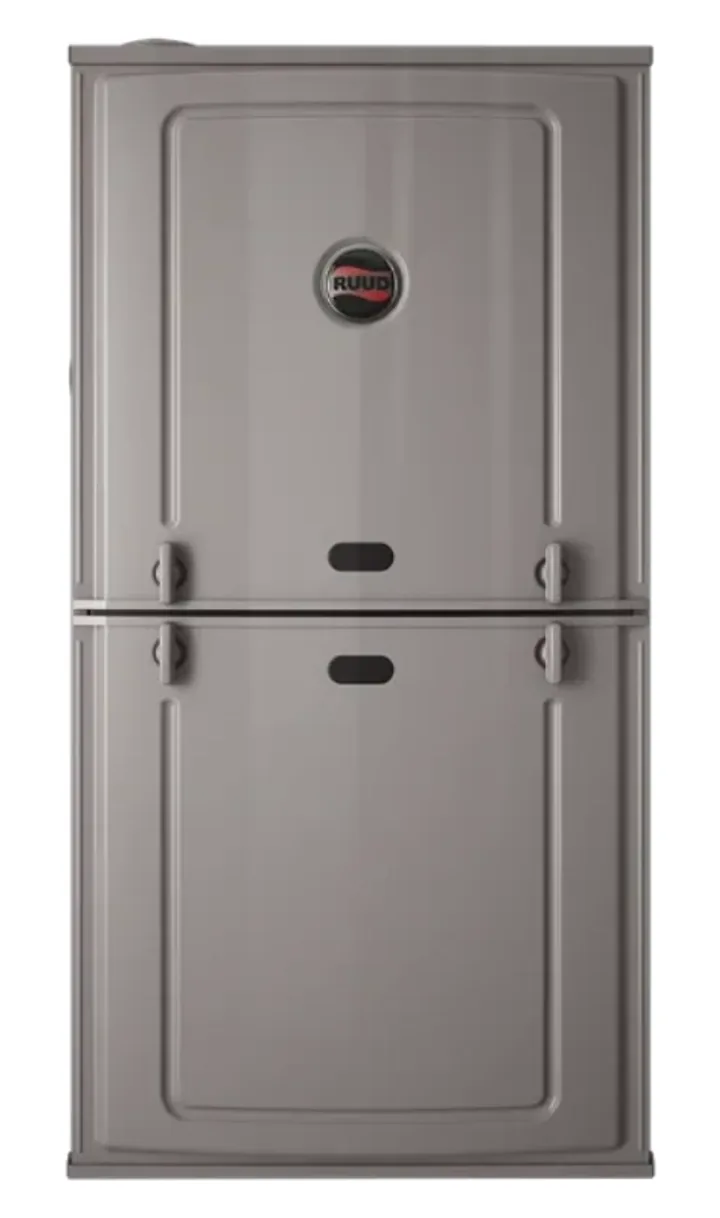
Gas furnace
Burns natural gas to make heat.
- Strong, fast heat on the coldest nights
- Works with any central AC system
- Efficiency ratings from 80% to over 98% AFUE
- Needs a gas line and proper venting
Gas furnaces, electric heat and heat pumps, repaired and replaced by a licensed Texas HVAC contractor.
Ignition problems, flame sensors, blowers, limit switches and furnaces that run but never get warm.
Heat pumps stuck in defrost, blowing cool air or running constantly on emergency heat.
Heat exchanger, gas connections, venting and burner checks so your system is safe to run.
Ruud gas furnaces from standard to high efficiency, sized for your home. See furnaces.
Backup heat in air handlers and heat pumps that trips breakers, smells burnt or doesn't kick on.
A pre-season check that cleans, tests and adjusts before the first cold front. See the plan.
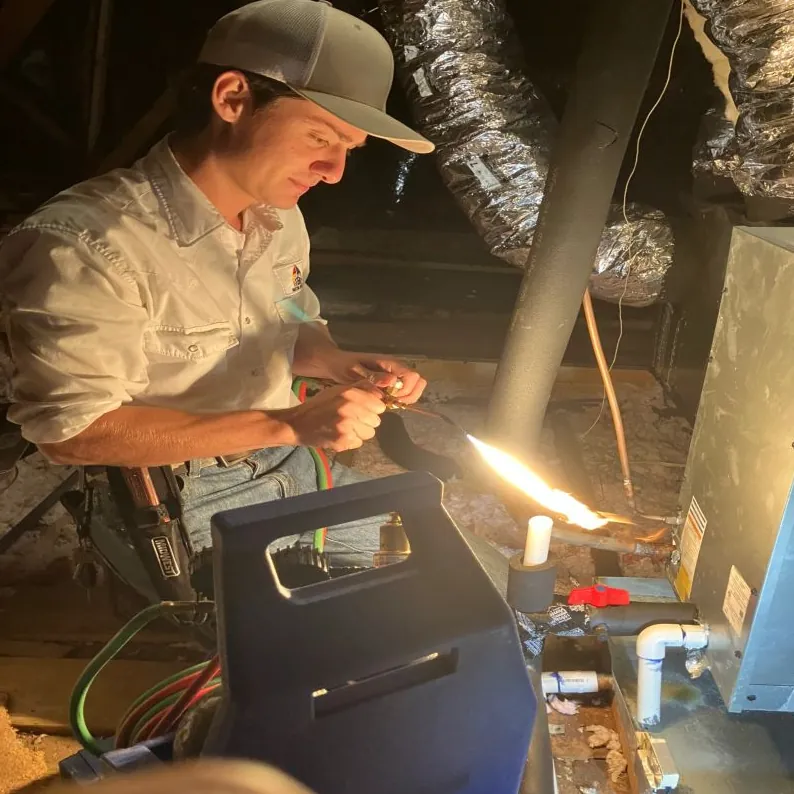
Most Houston furnaces live in the attic, out of sight. A few habits keep your family safe.
Both work well in Houston. The right one depends on your home, your ductwork and whether you have gas.
Burns natural gas to make heat.
Moves heat with electricity, and doubles as your AC.
A few minutes in October saves a no-heat call the first night it drops into the 40s.
Switch to Heat on a cool afternoon. A dusty smell for a few minutes is normal. A burning or electrical smell isn't.
Start the season with a clean filter so the furnace doesn't overheat and shut itself off.
Press the test button on every smoke and CO alarm and replace batteries that are more than a year old.
Heat pump owners: keep leaves and plants at least two feet away from the outdoor unit.
More answers on the FAQ page.
Common causes are a thermostat set to fan "on" instead of "auto", a dirty flame sensor, a clogged filter that trips the high-limit switch, or an ignition problem. Check the thermostat and filter first. If it keeps happening, call us.
A gas furnace typically lasts 15 to 20 years. Houston furnaces run fewer hours than northern ones, but many sit in hot attics, so age, rust and safety checks matter more than hours of use.
Yes. A fall tune-up checks the burners, ignition, flame sensor, heat exchanger and gas connections, and it confirms the system is safe before the first cold front. A cracked heat exchanger or a loose gas fitting is just as dangerous in a warm winter.
A furnace makes heat by burning natural gas (or with electric heat strips). A heat pump moves heat from outdoor air into your home using electricity, and works as your air conditioner in summer. Heat pumps are very efficient at the temperatures a typical Houston winter brings. Many homes pair a heat pump with backup heat for hard freezes.
A light frost in winter is normal, and the unit runs a defrost cycle to clear it. A thick block of ice, or ice that stays for hours, points to low refrigerant, a failed defrost control, or poor airflow. Turn it to emergency heat if you have it and call us.
Call for same-day heating service Monday through Saturday.